AI and the Stock Market: Technology Wins. But Who Funds It?
05 November 2026 _ News

This week, three major players in the field of artificial intelligence—Alphabet, Microsoft, and Amazon—reported their earnings. And the first thing to note is that, overall, the stock market’s reaction was far from enthusiastic.
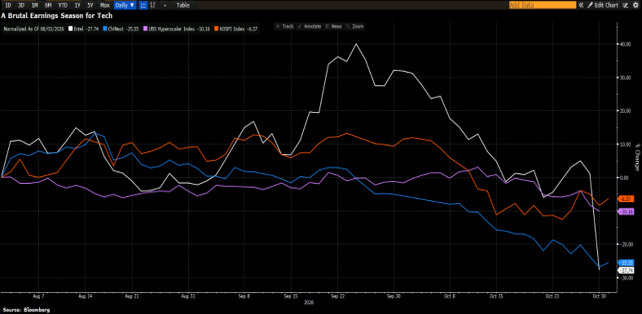
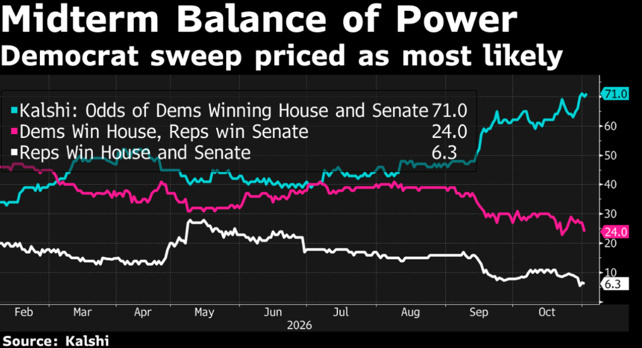
Microsoft rose, but Alphabet fell more than 10% and Amazon opened the session down 7%. Yet we’re not talking about companies in trouble—quite the opposite. The point, as we often say, is something else: when expectations are sky-high and the year-over-year comparison is very challenging, beating estimates and surprising the market every quarter becomes increasingly difficult. And that’s where I want to start, on the eve of a U.S. election that could add a bit of noise to the coming weeks.
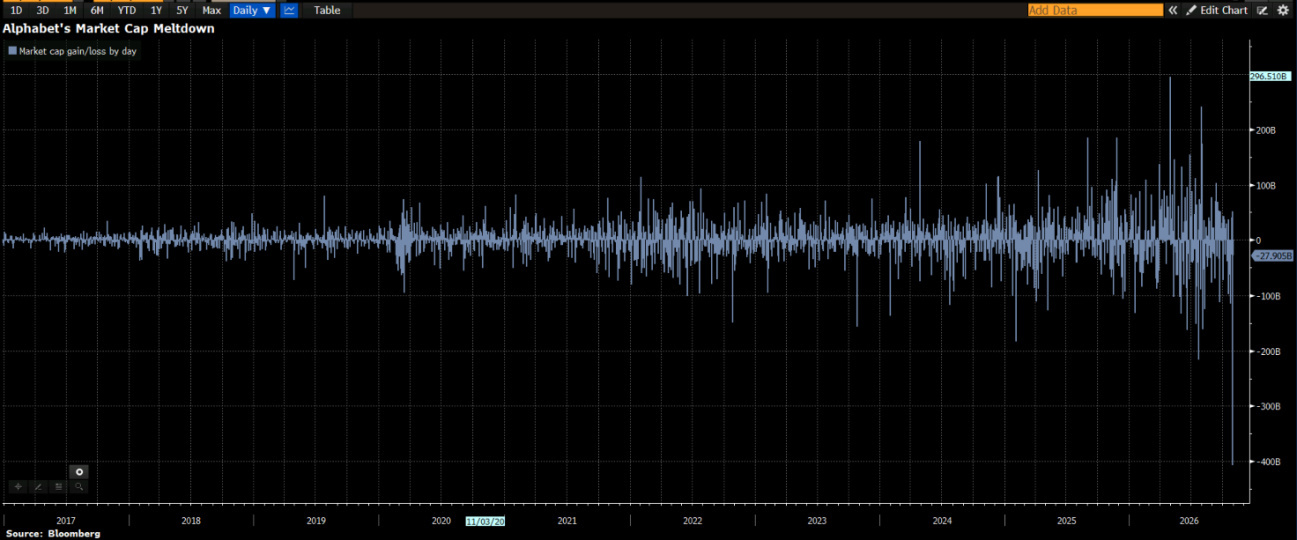
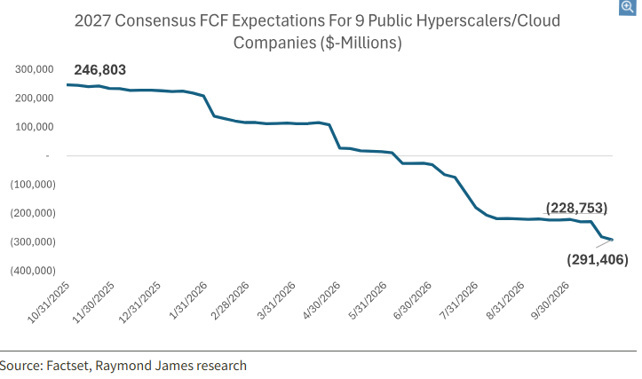
Let's take Alphabet as an example, because its case is the most instructive. There was certainly growth: revenue rose by 25%, the cloud business more than doubled, and the Gemini app surpassed one billion users, becoming the fastest-growing product in the group’s history. The market, however, focused on another figure: advertising revenue—the historic core of Google’s business—came in slightly below expectations. And at a time like this, even a small deviation fuels a specific fear: that artificial intelligence might, at least in part, cannibalize traditional search—that is, take away revenue from the very business that funds everything else. Added to this was a negative cash flow, during a phase of investments that will exceed 200 billion this year.
For Amazon, the story is similar. The company’s growth engine—its cloud division—grew by 39% to billion, and its operating profits rose from .4 billion to .8 billion. However, earnings and revenue fell slightly short of estimates, forecasts for the holiday season were slightly more cautious than expected, and, above all, the cost of AI investments is taking a toll: over the past twelve months, cash flow has turned negative by more than billion. Microsoft, on the other hand, beat expectations, generated .6 billion in cash flow, spent less than expected on investments, and reported accelerated growth in its cloud business. The market’s message is clear: today, growth alone is not enough. What matters is how that growth is financed—and whether or not it burns through cash.
Be careful, however, not to interpret this as a sign that funding for AI is running out. In just one week, approximately 5 billion in new funding has emerged: Anthropic’s IPO, which aims to raise up to 0 billion; a capital increase by Meta of up to billion; and a billion loan for SpaceX to purchase chips. The capital is there, but it’s selective. This is clearly evident in the credit market, which has split into two camps: large tech conglomerates continue to secure financing almost as if they were governments, while smaller, more indebted companies building data centers are forced to pay increasingly higher interest rates.
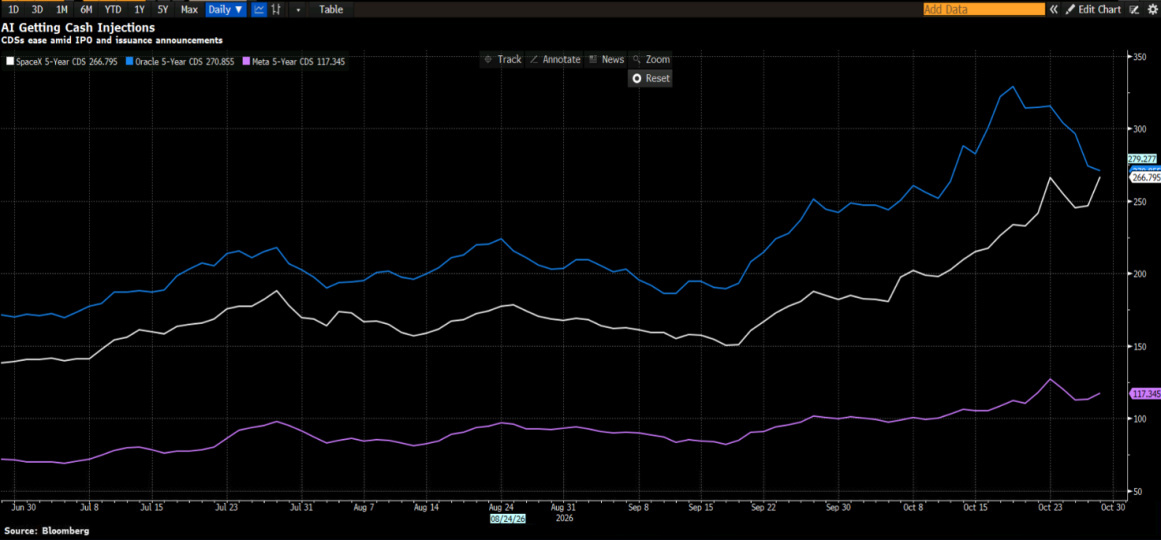
But the real question remains the same: Will all these investments pay off? This week, an interesting clue emerged from the prospectus filed by Anthropic—the company that develops the Claude models—as it prepares for its IPO. First-half revenue jumped from .2 billion to .3 billion in one year, and the company posted its first operating profit in the second quarter. The most significant figure, however, is another: a year ago, for every dollar of revenue, the company spent about on computing power; today, it spends 55 cents. This is a single case, and IPO prospectuses should always be read with caution, but it illustrates a trend that applies to the entire industry. Each new generation of chips and models performs the same work at a lower cost. This allows prices to be lowered, and lower prices cause usage to skyrocket.
Here, however, we need the other half of the argument—the one we might call the “investor’s perspective.” Just because artificial intelligence works doesn’t mean that everyone who funds it will make money. Those who built fiber-optic networks in the late 1990s were absolutely right: internet traffic would explode. But so much capacity was built that prices plummeted, and many of those investors lost nearly everything. The same thing had already happened with railroads in the 19th century: the country reaped enormous benefits, while those who had financed them benefited far less. Today’s risk is the same. If efficiency improves faster than demand, some of the data centers currently under construction could end up underutilized. And the figures at stake are staggering: Anthropic alone has commitments for computing infrastructure totaling approximately 7 billion, compared to projected revenue of .6 billion in 2025. Much of that investment is debt-financed, at rising costs. This isn’t a warning, but a reminder: in every major investment cycle, technology almost always wins—investors, not always.
Meanwhile, the U.S. economy continues to grow rapidly, and AI has now become a key driver of that growth.
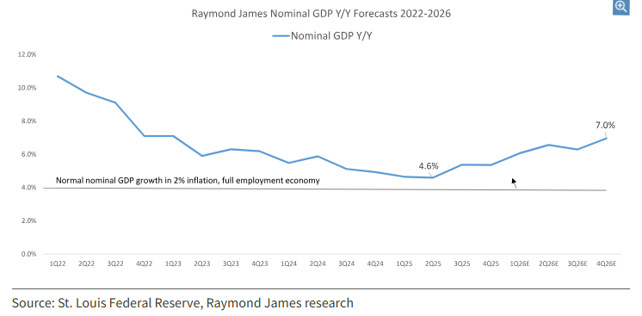
Third-quarter GDP grew by 3.4%, but that figure underestimates the true strength of the economy: domestic private demand—that is, spending by households and businesses—rose by 4.9%, the fastest pace since 2021. GDP was held back primarily by imports of AI components. Business investment accounted for about half of the quarter’s growth, and spending on technology and software now accounts for 5.5% of GDP—more than the peak of 4.5% reached during the dot-com bubble. The labor market is extremely strong: initial jobless claims fell below 200,000 for the tenth time this year, a record since 1969.
In this context, the Fed decided to hold off. Rates remained unchanged, with a 10-2 vote.
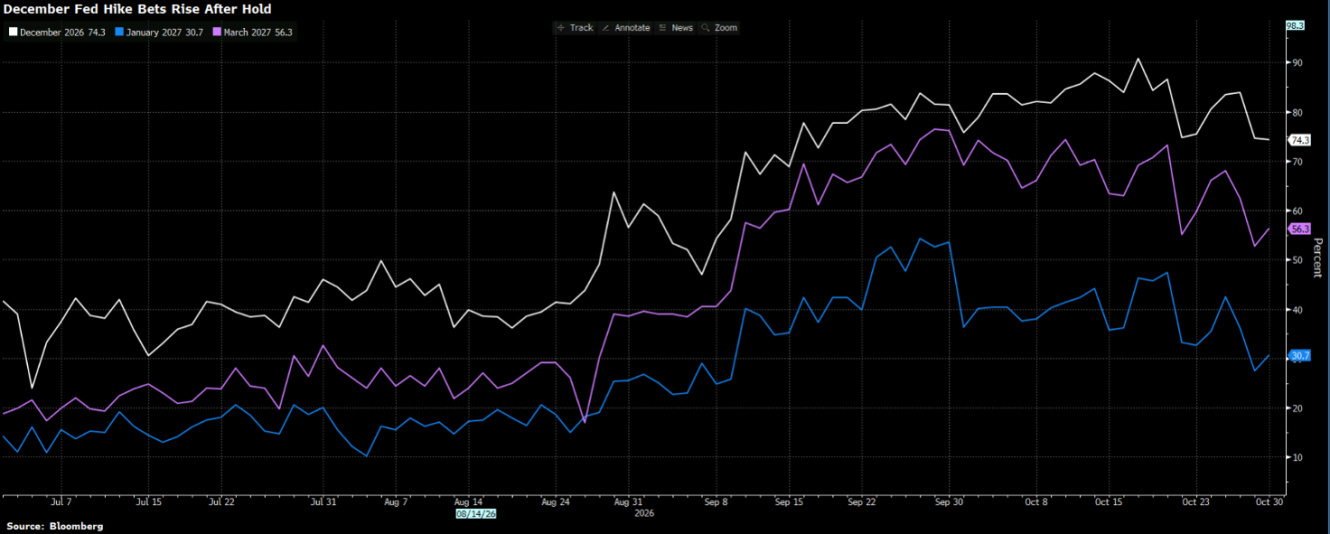
Warsh described the economy as “strong,” admitted that “inflation is too high”—with the PCE at 3.6% and nearly half of the basket’s components above 3%—but preferred to wait for more data. And there was no shortage of criticism. Some economists compared the Fed to someone who, with the fire alarm blaring and smoke seeping under the door, asks for more evidence before calling the fire department.
And the stock markets have already begun to react accordingly. In October, the equally weighted S&P 500—the index in which every company counts equally—performed significantly better than the traditional index, which is dominated by big-name tech companies. The gap between the two is the widest it has been since April 2009. In other words: while the AI giants were struggling, the rest of the market was rising. This confirms that the selectivity we were discussing isn’t limited to the credit market: equity investors are also shifting capital toward the rest of the market at a pace not seen in years.
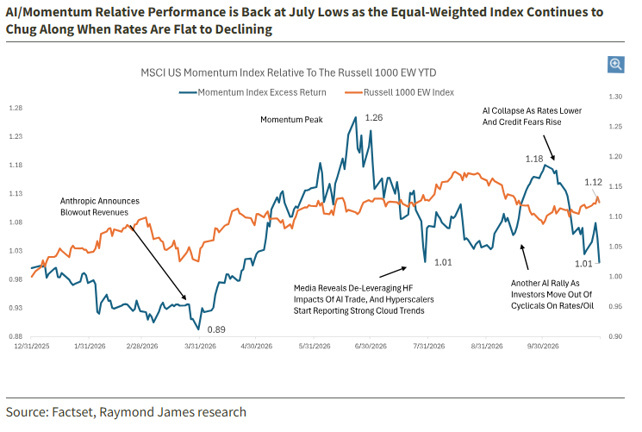
What do we take away from this? The lesson of the week is that the AI boom is not in question, but the market has stopped rewarding it across the board. First: look at the quality of financial statements and the ability to generate cash, because that is the criterion by which the market today separates the winners from the rest. Second: distinguish between companies that use AI infrastructure to boost productivity and those that build that infrastructure on debt, because the risks are very different. Third: as we’ve been saying for a while, take advantage of the ongoing rotation to diversify beyond the usual big names.
The contents of this informative message are the result of the free interpretation, evaluation and appreciation of Pharus Asset Management SA and constitute simple food for thought.
Any information and data indicated have a purely informative purpose and do not in any way represent an investment advisory service: the resulting operational decisions are to be considered taken by the user in full autonomy and at his own exclusive risk.
Pharus Asset Management SA dedicates the utmost attention and precision to the information contained in this message; nevertheless, no liability shall be accepted for errors, omissions, inaccuracies or manipulations by third parties on what is materially processed capable of affecting the correctness of the information provided and the reliability of the same, as well as for any result obtained using the said information.
It is not permitted to copy, alter, distribute, publish or use these contents on other sites for commercial use without the specific authorization of Pharus Asset Management SA.