AI and the Stock Market: The Room Is Full. Where’s the Emergency Exit?
29 October 2026 _ News

On Thursday, the Nasdaq had its worst day in four months, falling 2.6%, and semiconductor stocks lost nearly 7%. Yet, during the same trading session, the equally weighted S&P 500 index—in which each company is weighted equally—closed higher.
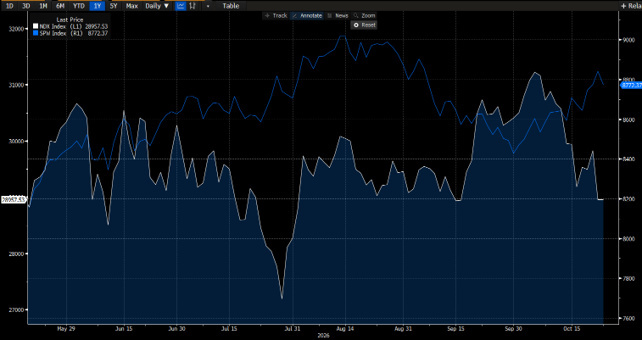
Investors, in other words, haven’t pulled out of stocks; they’ve just, so to speak, changed rooms. And it’s precisely the image of a crowded room that I’m presenting to you today, because we’ve seen two such rooms this week. In the first are artificial intelligence companies, vying for the same capital to fund massive investments. In the second are the investors, who say they’re afraid but remain almost entirely invested in stocks. And surrounding these two rooms are three key events: the Fed meeting on Wednesday, earnings season kicking into high gear, and the U.S. midterm elections on November 3.
Let's start with the first section. Meta was the catalyst for the sell-off. The quarterly results were excellent, with revenue up 26% and forecasts exceeding expectations, but free cash flow came in at a negative 2.1 billion.
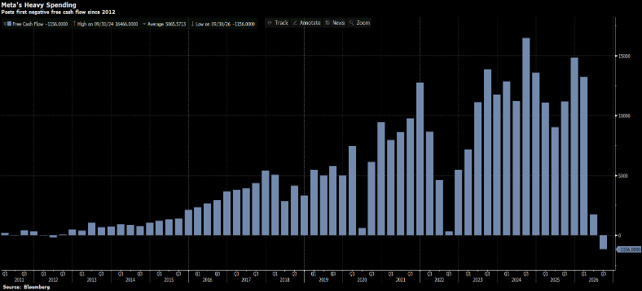
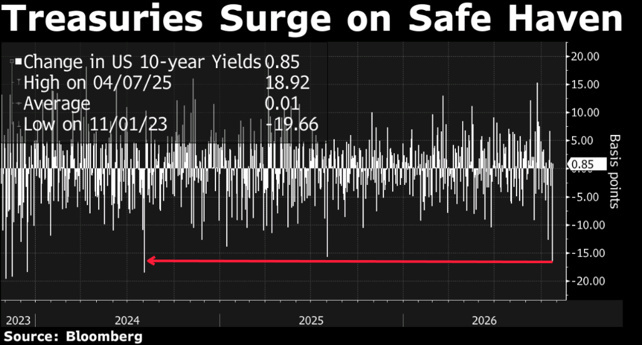
The company confirmed investments ranging from 135 to 145 billion and announced a new class of non-voting shares to raise capital. One sentence in particular from its press release gives pause: recent capital raises by companies like Alphabet and SpaceX, along with those expected from Anthropic and OpenAI, have created an “increasingly challenging” funding environment. This is not an isolated view. Broadcom’s CEO warned that capital could become the main constraint on AI development; Larry Fink of BlackRock said he had never seen such fierce competition for capital; and Jensen Huang of Nvidia explained that demand is enormous but capital is scarce. The message is new: the problem is no longer just how much these investments yield, but whether there is enough money to fund them all. The market reacted accordingly: Meta fell 7%, and the U.S. 10-year Treasury yield dropped sharply below 5% for the first time in a month, because a slowdown in AI means less economic growth.
We believe that more selective capital is good news for the AI boom, because it forces investors to make better choices about where to invest and reduces the risk of overbuilding. In other words, the race continues, but with a stricter referee.
And this is where a concept comes into play that, in my view, is the key to understanding this earnings season. Think of a car: when the driver presses the accelerator, you feel your back pressed against the seat, but at a constant speed—even at 200 per hour—that pressure disappears. It’s not the speed that pushes you; it’s the acceleration. The same thing happens with AI-related earnings. Every dollar that tech giants spend on data centers goes to their suppliers—the companies that produce chips, memory, and electrical systems. But the stock market doesn’t look at how much they earn; it looks at how much more they’re earning compared to the previous year. If a tech giant spends 800 billion this year and the same amount next year, its suppliers will rake in a fortune, but they won’t see growth. Today’s problem stems from a very challenging basis for comparison. Spending has nearly doubled this year: to continue growing, it will have to clear a very high bar next year. That’s why the fact that Meta has adjusted its investment estimates by just 5 billion matters more than it seems. And if capital were to become truly scarce, the first to feel the slowdown would be the suppliers themselves.
This brings us to earnings—and specifically to semiconductors, which now account for a larger share than ever before: they represent more than 20% of the expected earnings for the entire S&P 500. Analysts are decidedly optimistic here.
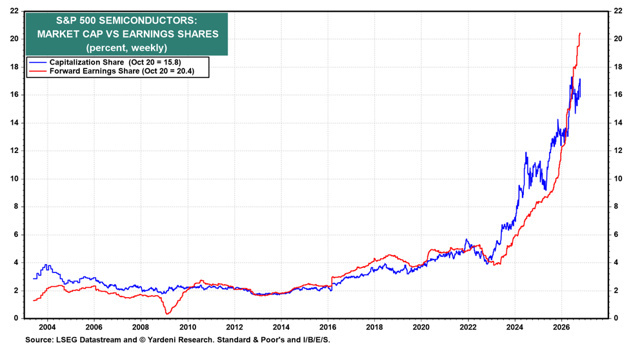
They forecast earnings growth of more than 60% per year for the sector over the next five years, and this is driving the growth estimate for the entire index close to all-time highs. The key question is where these profits are coming from—namely, from a record profit margin of over 50% made possible by demand exceeding supply.
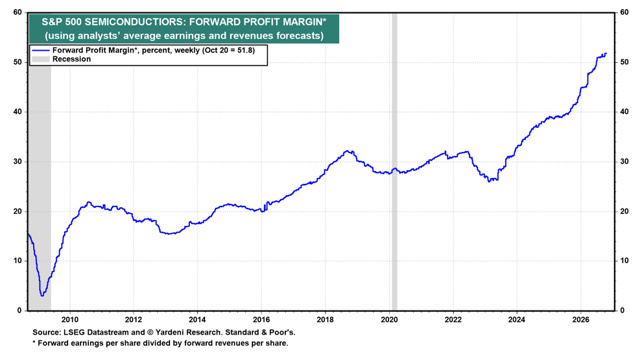
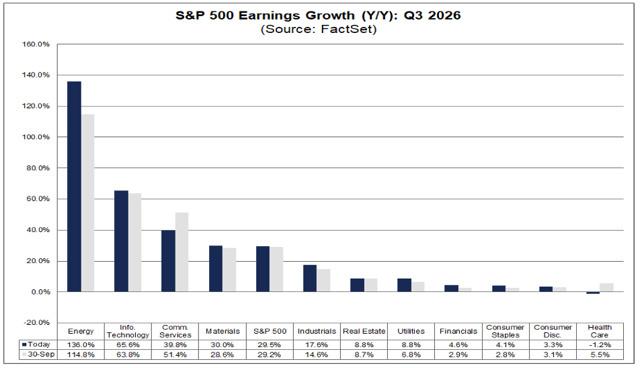
Maintaining these levels for five years would require AI spending that continues to accelerate year after year, and that seems truly ambitious. The good news is that the market doesn’t fully buy into this: semiconductors are trading at about 14 times expected earnings, a far cry from 1999 valuations. The exuberance lies in the estimates, not in the prices. And fortunately, strong earnings aren’t limited to chips: growth of around 30% is expected for the third quarter, with all eleven sectors posting gains.
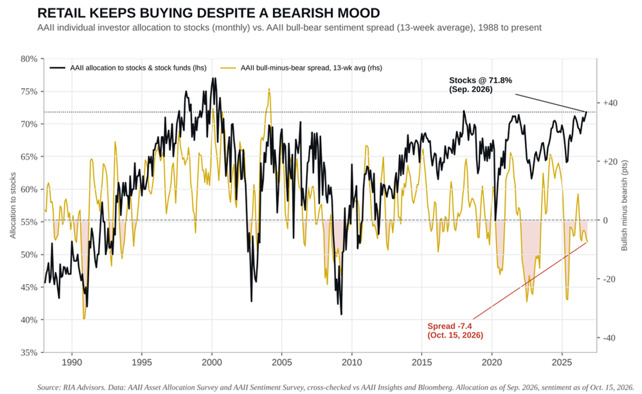
Let’s move on to the second group: investors. In surveys, pessimists outnumber optimists and have remained above their historical average for 36 consecutive weeks. This is usually interpreted as a contrarian signal: if everyone is afraid, the worst is already priced in. But this time, the facts tell a different story. The very same individual investors who say they’re worried have allocated 72% of their portfolios to stocks. Aside from a brief spike at the end of 2017, you have to go back to the 2000 bubble to find a higher level of investment among small investors. Sentiment only matters when it changes behavior. If you say you’re afraid but remain fully invested, that fear doesn’t act as a buffer. Rather, it risks becoming a trigger just waiting for a reason, because when almost everyone is already in the market, there are few buyers left when the first shock hits.
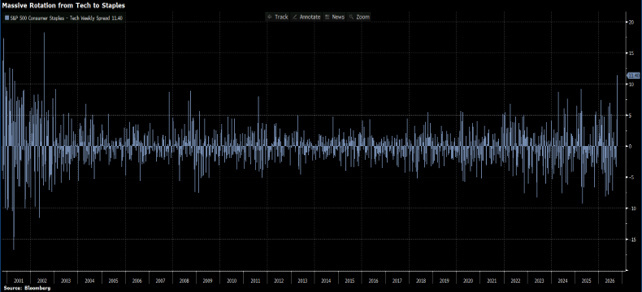
What can we take away from this week? I’d say caution—which doesn’t mean selling everything. The U.S. economy remains solid, earnings are growing, and Thursday’s rotation shows that investors pulling out of tech are reinvesting elsewhere, not fleeing. It is, however, a reminder to hold a little less of what everyone else is holding. Specifically, check to make sure your equity allocation hasn’t grown beyond your target simply because it’s seemed normal in recent years, and take advantage of still-high prices to bring it back in line. Shift some of your focus away from the most crowded blue-chip names toward sectors and companies that have already corrected. And within the AI sector, continue to favor companies that fund their growth with their own cash.
Between the Fed, the elections, and the Middle East, the coming weeks could put the room to the test. And in a crowded room, the exits never get any wider when everyone needs them at the same time. For those looking for an emergency exit, however, there is an alternative—one that almost everyone has snubbed for years. Just this Thursday, as the Nasdaq experienced its worst day in four months, U.S. Treasury bonds rose and the 10-year yield fell back below 5%. Who would have thought: the much-maligned bonds are once again doing what they were designed to do—namely, protecting portfolios when the room gets too cramped.
The contents of this informative message are the result of the free interpretation, evaluation and appreciation of Pharus Asset Management SA and constitute simple food for thought.
Any information and data indicated have a purely informative purpose and do not in any way represent an investment advisory service: the resulting operational decisions are to be considered taken by the user in full autonomy and at his own exclusive risk.
Pharus Asset Management SA dedicates the utmost attention and precision to the information contained in this message; nevertheless, no liability shall be accepted for errors, omissions, inaccuracies or manipulations by third parties on what is materially processed capable of affecting the correctness of the information provided and the reliability of the same, as well as for any result obtained using the said information.
It is not permitted to copy, alter, distribute, publish or use these contents on other sites for commercial use without the specific authorization of Pharus Asset Management SA.