S&P 500 Earnings for Q2 2026: Growth Extends Beyond the Magnificent 7
10 September 2026 _ News

We’ve entered September, a month that investors traditionally view with some caution, and we’re heading into it with indices near their highs and a U.S. economy that continues to expand. This week, however, the data has highlighted a point worth analyzing. For months, the narrative has been simple: there are seven stocks that matter—the Magnificent 7—and 493 that remain in the background. The numbers from this earnings season, now 97% complete, point to a more nuanced reality, and it’s helpful to understand it in order to set our positioning for the coming months.
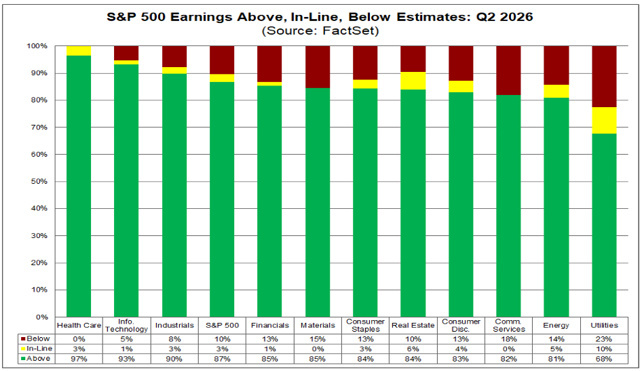
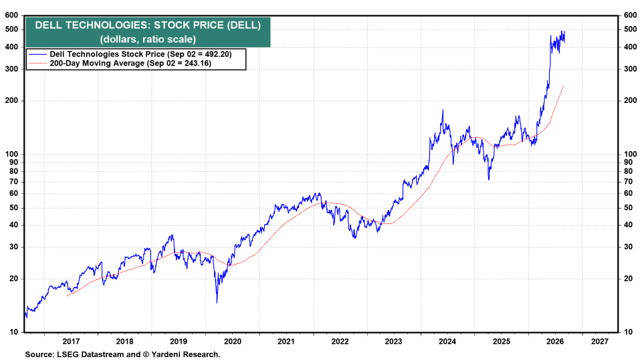
Let’s start with this week’s highlights. On Thursday evening, Broadcom—one of the giants in the AI semiconductor industry—reported its earnings. The numbers were stellar: revenue up 86% year-over-year, profits up 96%, and revenue from AI chips skyrocketed by 221%. Mind-boggling numbers. Yet the stock saw profit-taking, because the guidance for the next quarter—while excellent—fell just short of Wall Street’s already sky-high expectations for a company that’s certainly not cheap in terms of multiples. It’s the same old story: when a stock is priced for perfection, even excellence isn’t enough. That same evening, however, Dell showed the other side of the coin: revenue up 58%, earnings up 203%, and AI servers doubled. And the stock soared to record highs, supported by more reasonable valuations. The message is clear: the AI infrastructure boom is real and is still accelerating. The problem isn’t the fundamentals. It’s the price we’re paying for those fundamentals.
And here I come to the heart of the week, because it debunks a myth. It’s true that the Magnificent Seven posted monstrous profit growth—118 percent. But a huge chunk of that figure is an accounting trick: Alphabet and Amazon alone recorded 1 billion in paper gains on their stakes in still-private AI companies, such as Anthropic and OpenAI. These are paper gains that remain on the balance sheet without generating cash and are not repeatable, unless those valuations rise again. If we exclude these two companies, the other five of the Magnificent Seven beat estimates by just 4.4%—below the index’s historical average of 7%.
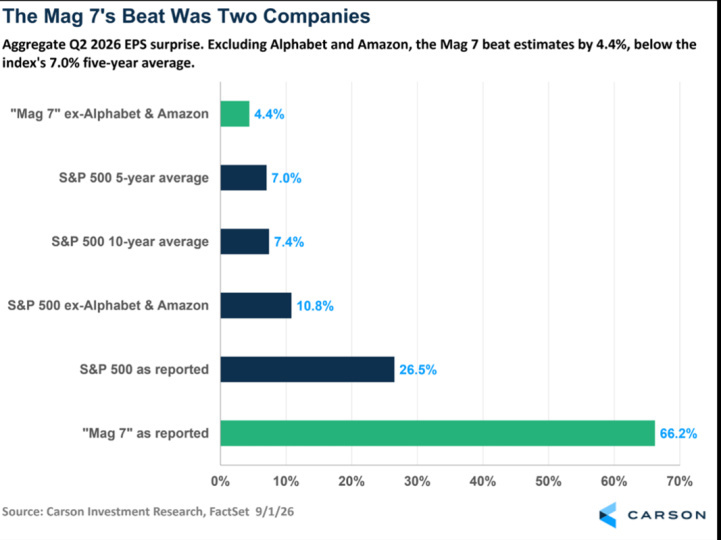
But be careful, because there’s a silver lining: once stripped of these extraordinary effects, underlying growth turns out to be less spectacular, but also healthier and more repeatable. And that’s exactly what matters for the coming quarters: normal, sustainable growth is better than a figure inflated by one-time accounting items that are unlikely to recur.
While everyone was watching the seven giants, the other 493 stocks in the index achieved something remarkable: they posted a 31.8% increase in earnings, the best since the end of 2021. Ten out of eleven sectors reported higher earnings compared to June. Energy, driven by higher oil prices. Financials, which jumped from 5% growth to 22%. Industrials, real estate, and consumer goods. Every single sector increased its revenue. This isn’t the story of seven companies. It’s a story of widespread profitability.
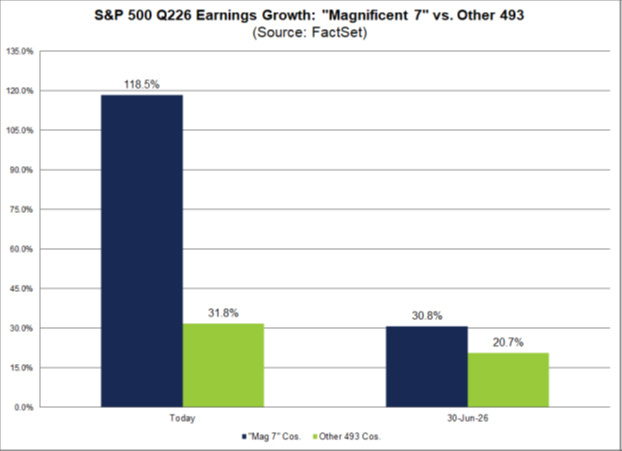
And this is where the concept that gives this episode its title comes into play. Analysts predict that in the fourth quarter, the other 493 stocks will outperform the Magnificent 7—27% versus 23%. This is a historic reversal. To put it in perspective: in June, the gap between the Magnificent 7 and the rest of the index, excluding accounting tricks, was nearly sixteen percentage points. Today, it has already narrowed to eleven. By the end of the year, according to estimates, it will turn negative. In short, market leadership is widening rather than narrowing. And for a fund manager, this is an important signal, because a market dependent on just a few names is fragile, while a market where earnings strength is spread across many sectors is structurally more solid.
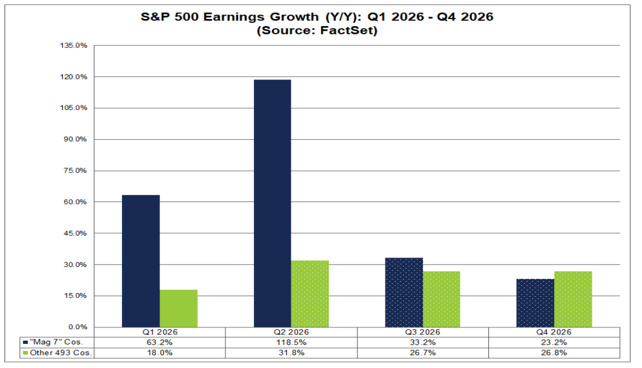
In the spirit of intellectual honesty—which is at the heart of our profession—we must also point out that this story comes with caveats. First: part of the strength of the 493 is itself concentrated: Micron and Chevron—an oil stock and a semiconductor stock, respectively—account for a significant portion of that growth. Second, and more importantly: next year, earnings growth will slow for everyone. Analysts have cut their 2027 estimates for a record number of companies, and projected growth is falling from 31% this year to 14%. It’s a slowdown that affects everyone, giants and otherwise.
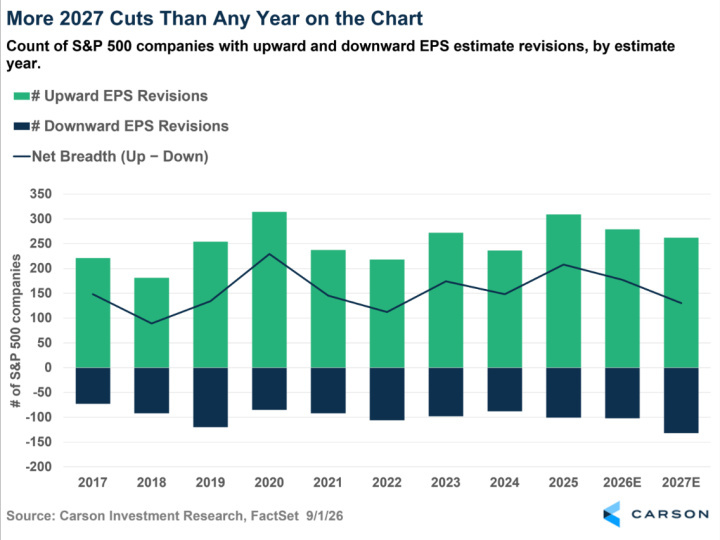
And third: the market, for now, isn’t pricing in any of this. In a record-breaking quarter, companies that beat estimates gained an average of just 0.6% on the trading day following the release of their results, compared with a historical average of 1%. This is a sign that the market has already priced in a great deal.
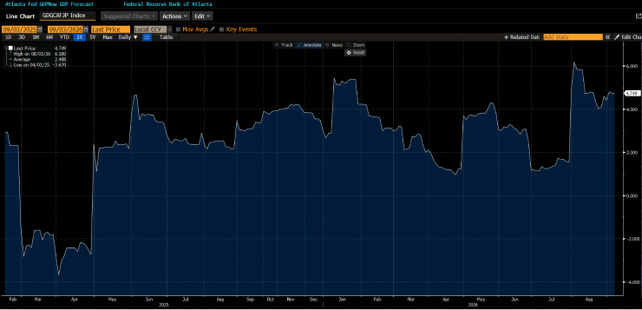
And this is where two clouds loom on the horizon. The first is oil: the conflict with Iran has flared up again, the United States has struck several Iranian oil tankers, crude oil prices have started to rise again, and with them, fears of inflation. The second is the Fed, which meets on September 16. The situation is delicate, because the economy is anything but weak: the Atlanta Fed’s estimate for third-quarter growth has risen to an impressive annualized 4.8%, the services sector is at its highest level since February, and the labor market remains solid.
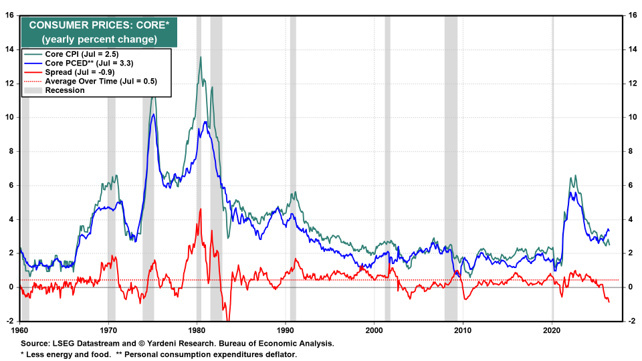
But inflation isn't letting up: the price indices paid by businesses remain high, and there is a significant technical divergence worth noting—the CPI measure is heading toward 2.4%, but the Fed's preferred measure, core PCE, remains above 3.3% and is on the rise. The Fed knows this, and it is unlikely to be misled by a cooler inflation figure, knowing that the other one is hotter. The futures market has shifted from estimating a 70% probability of a rate hike in September to about 50%, after some more cautious members hinted that they will wait for the data. The burden of proof now rests entirely on the upcoming inflation figures.
In short: This week has taught us that the story of the “magnificent seven versus everyone else” is coming to an end, and that beneath the surface of the market, earnings strength is much more widespread and healthy than the headlines suggest. That’s good news. But it comes in a historically challenging month, with oil prices on the rise and the Fed having to decide whether its fight against inflation is over or not.
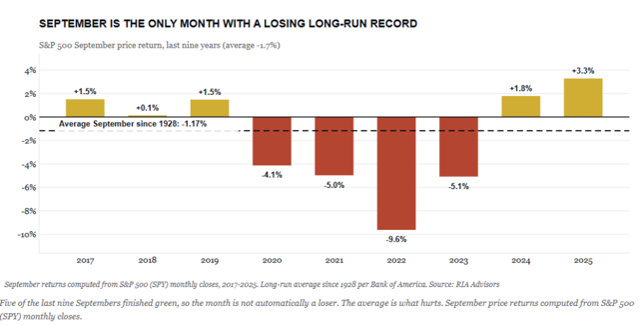
What does this mean for us in practical terms? In short, we’re in a strong but complacent market, and seasonal factors aren’t helping. This isn’t a reason to sell—the fundamentals, reported earnings, and the economy don’t justify it. But it is a reason to prepare. Specifically: first, capitalize on the shift in momentum by gradually rebalancing the portfolio toward sectors that are generating real earnings growth, rather than relying solely on big-name tech companies. Second, take advantage of the fact that, after the best earnings quarter in the last five years, the market has paradoxically become cheaper: the forward price-to-earnings ratio has fallen below the five-year average because earnings have grown faster than prices. Third, and I’ll say this again as always: maintain a higher-than-usual cash reserve—not to exit the market, but to have ammunition ready if the volatility in September and October—which the calendar suggests is coming—creates opportunities to enter at better prices.
The contents of this informative message are the result of the free interpretation, evaluation and appreciation of Pharus Asset Management SA and constitute simple food for thought.
Any information and data indicated have a purely informative purpose and do not in any way represent an investment advisory service: the resulting operational decisions are to be considered taken by the user in full autonomy and at his own exclusive risk.
Pharus Asset Management SA dedicates the utmost attention and precision to the information contained in this message; nevertheless, no liability shall be accepted for errors, omissions, inaccuracies or manipulations by third parties on what is materially processed capable of affecting the correctness of the information provided and the reliability of the same, as well as for any result obtained using the said information.
It is not permitted to copy, alter, distribute, publish or use these contents on other sites for commercial use without the specific authorization of Pharus Asset Management SA.