Artificial intelligence: the boom continues, but who is funding the race?
19 October 2026 _ News

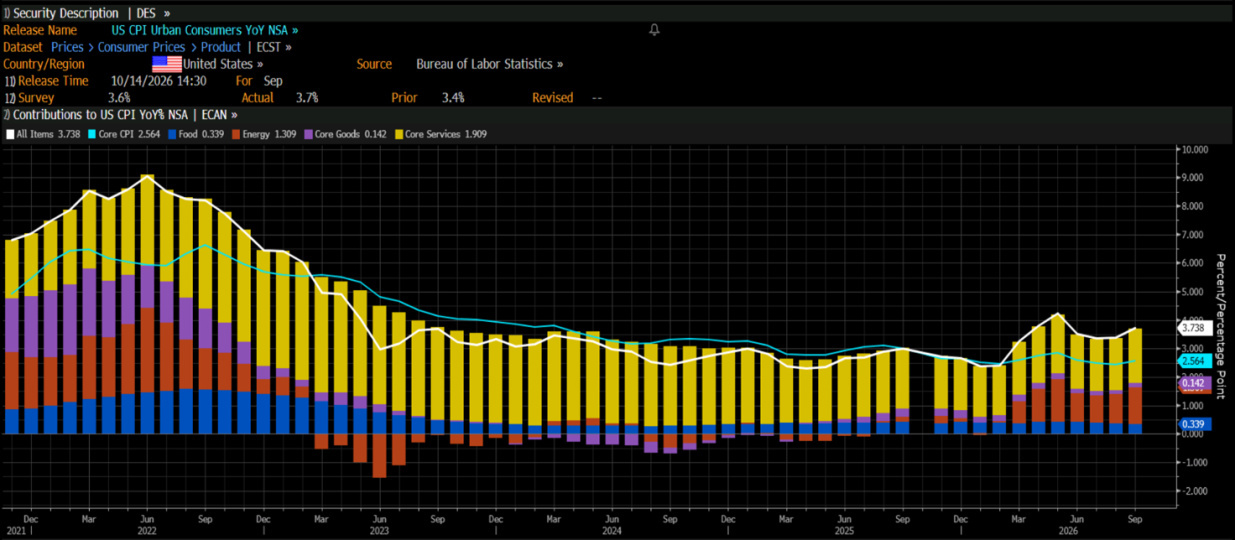
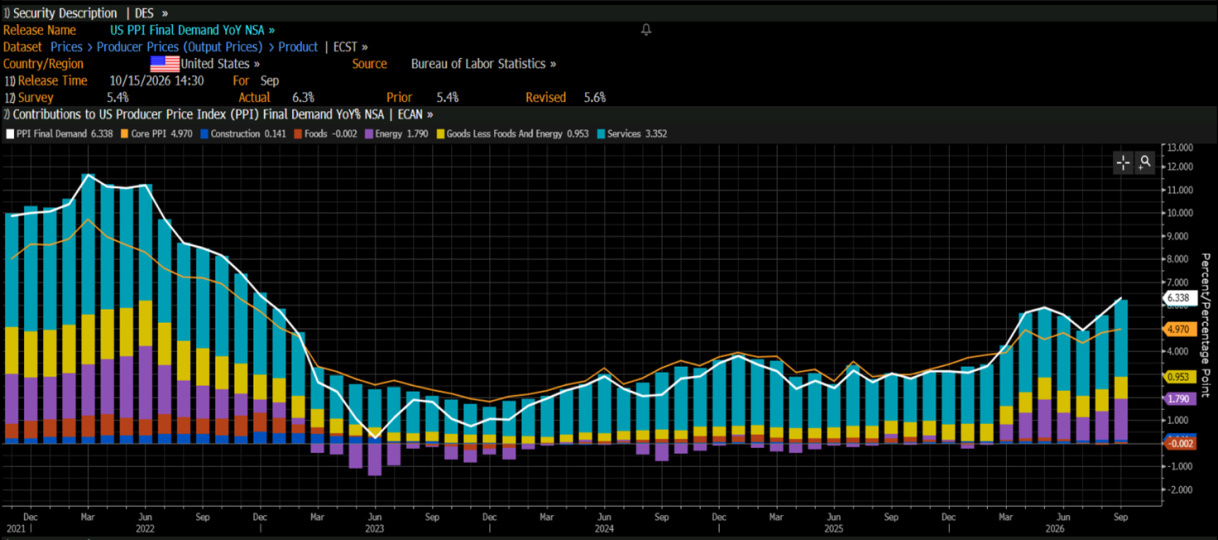
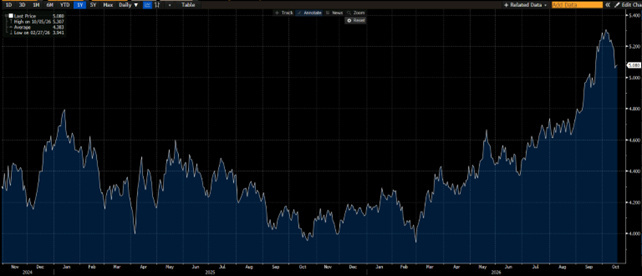
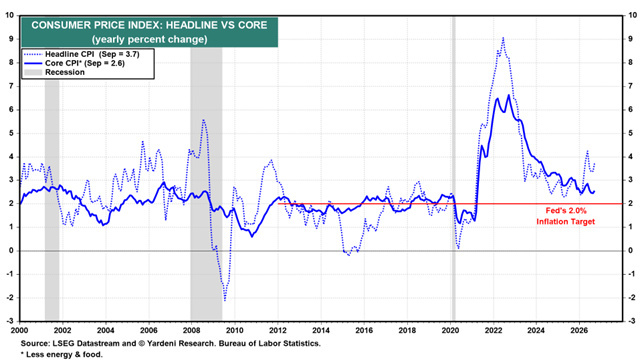
We’ll explore the reasons behind this move, but first, let’s start with inflation, as it remains the underlying problem.
The surge in prices began with energy, with gasoline prices rising 9% in just one month and more than a third over the past year. But inflation has spread beyond energy, with more than half of the items in the consumer price basket increasing by over 3% annually.
Prices for computers and electronic devices are rising at the fastest pace on record, as the AI boom has driven chip prices to extraordinarily high levels.
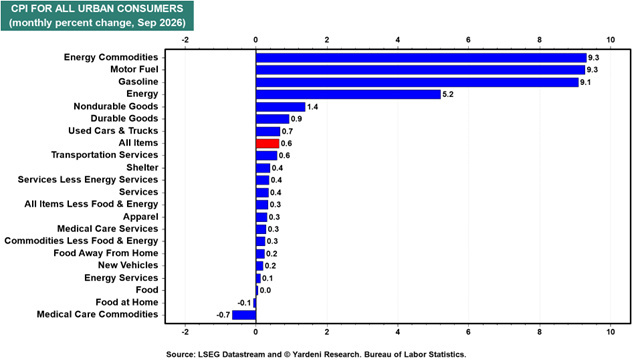
The Fed’s Beige Book, which reports on economic conditions across its twelve districts, confirms this picture, highlighting that price pressures remain strong or are accelerating in half of the districts.
Inflation has now remained above the Fed’s 2% target for 67 consecutive months, and the probability of an interest rate hike as early as late October has increased, although December remains the most likely scenario.
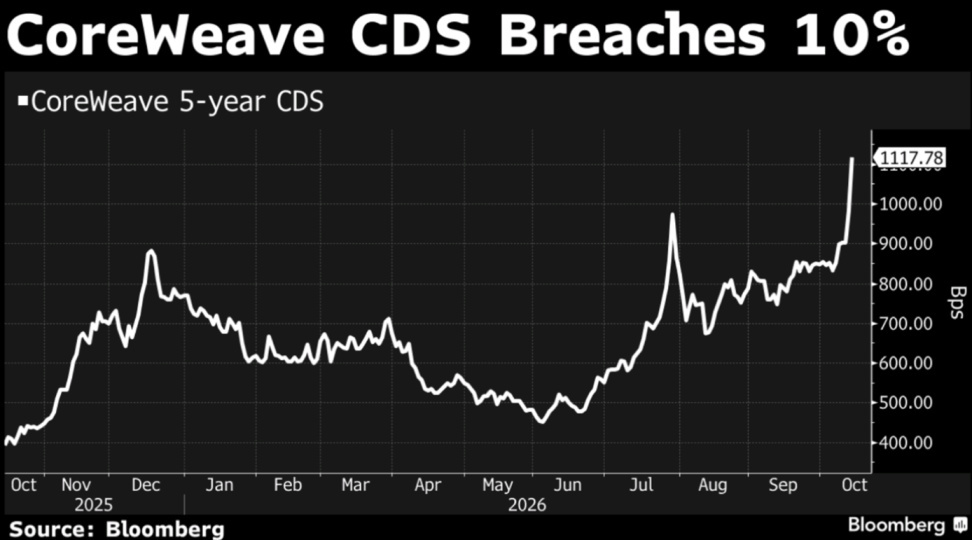
The alarm bell was sounded by CoreWeave, one of the so-called “neocloud” companies that build and rent out computing capacity for AI, financing much of their operations through debt.
Its bonds plunged, and its shares fell 16% in a single trading session, while its credit default swap (CDS) spread, a measure of default risk, surged amid growing concerns about the company’s ability to sustain its debt burden.
Around the same time, a Gartner study began circulating. According to the analysis, AI data center operators will need .5 trillion in revenue by 2030 to cover their costs and generate adequate returns, compared with the .6 trillion currently projected.
Many investors followed a simple line of reasoning: if the AI boom slows down, so does one of the main engines of U.S. economic growth. And in that scenario, buying government bonds becomes more attractive.
That explains why bond yields fell despite persistent inflation. In a single trading session, the Nasdaq dropped nearly 2% and semiconductor stocks lost 5%, as investors shifted toward more defensive sectors such as pharmaceuticals, consumer staples, and gold.
But there is an important distinction to make here, and I believe it is the most important lesson of the week: not all players in the AI industry are created equal.
On one side, we have the major hyperscalers — Amazon, Alphabet, Meta, Microsoft, and Oracle — which are expected to spend nearly 0 billion combined this year and more than .1 trillion next year. They have strong balance sheets and generate enormous cash flows, meaning that higher borrowing costs are unlikely to significantly change their investment plans.
On the other side, there are smaller, heavily indebted companies that benefit from the same demand but operate with much narrower margins for error. For them, a 10-year Treasury yield above 5% can be a serious problem.
Demand for computing capacity continues to outstrip supply, so it is far too early to declare the AI boom over. However, it is time to pay closer attention to who is financing this expansion with their own cash and who is relying on borrowed money.
TSMC provides further evidence of the industry's underlying strength. The company reported record revenue of .7 billion, up 51%, while profits surged 69%. It also announced that capital expenditures for the 2026–2028 period would be significantly higher than in the previous three years.
These are extraordinary figures, yet the market's reaction was subdued. Investors are now increasingly focused not just on how fast the AI industry is growing or how profitable it may become, but also on how much it costs to sustain that growth.
And this inevitably brings us to the issue of concentration, both in earnings growth and stock market performance.
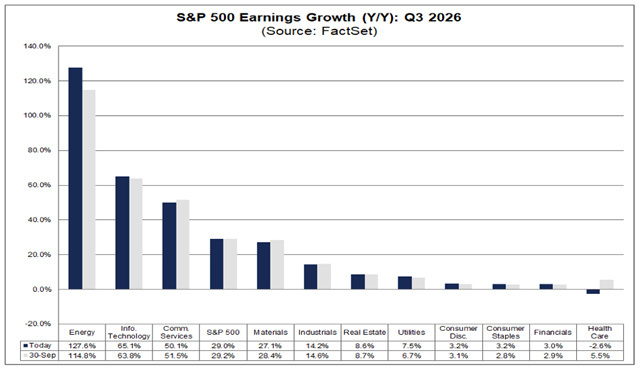
For the third quarter, earnings are expected to grow by around 30%. However, Micron and Nvidia alone are projected to account for roughly one-third of that growth, while just ten major companies could explain approximately two-thirds.
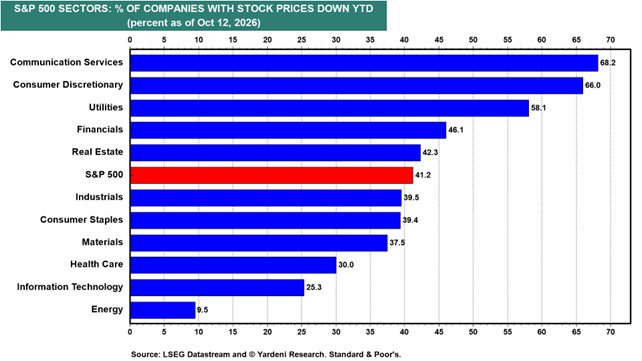
Market breadth has also narrowed. In mid-August, around 70% of S&P 500 stocks were trading above their 100-day moving average. Today, that figure has fallen to roughly one-third, and more than 40% of the stocks in the index are down year-to-date.
It may look like a sign of weakness, but a Fidelity study analyzing nearly a century of data, from 1926 to today, tells a different story.
Historically, periods of extremely low market breadth have been followed by better, not worse, average returns over the subsequent twelve months, with rare but severe exceptions such as the Great Depression and the 2008 financial crisis.
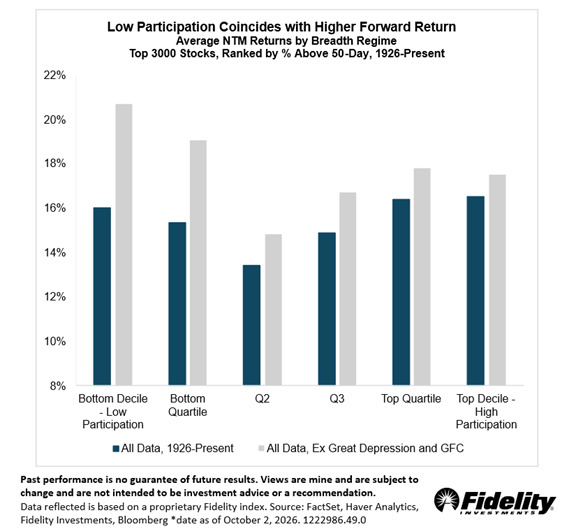
There is, however, an unusual aspect to the current situation. Normally, when so few stocks are participating in a rally, it is because the broader market has already declined. In 97% of historical cases, the index had already fallen at least 5% from its highs.
Today, however, the index remains close to record levels, supported by a handful of large companies, while many other stocks have already suffered significant declines. It is a kind of hidden correction: the correction has happened, but it is not visible in the index.
This makes it somewhat more likely that the index itself will eventually experience a pullback. However, a decline of 5–10% is a normal market event, occurring almost every year. Weak market breadth may therefore signal some short-term volatility, but historically, markets that have managed to withstand this internal weakness have been more likely to continue rising. Meanwhile, beneath the surface, the real economy shows no signs of weakening. And this message comes directly from the major banks that have kicked off earnings season.
Their results have been solid, even though the stock market reacted cautiously amid concerns about higher interest rates. However, the comments from their CEOs were particularly revealing. Jamie Dimon of JPMorgan highlighted strong corporate investment and continued consumer spending. David Solomon of Goldman Sachs described the economy as “very, very resilient.” Jane Fraser of Citigroup pointed out that, despite all the attention surrounding AI, consumers remain the main driver of economic growth. And the macroeconomic data support this view.
Initial jobless claims have remained below 200,000 for five consecutive weeks, the longest streak since 1969, while restaurant spending has increased for eight straight months. According to Bank of America, card spending is growing faster among lower-income households than among wealthier ones, supported by wage growth of 4.5% in that income group. This suggests that economic growth is broadening rather than narrowing.
So, what are the key takeaways from this week's market analysis?
First, the market's main concern has shifted from inflation to the sustainability of AI spending. This changes how investors should assess the technology sector in particular. It no longer makes sense to invest indiscriminately in anything related to AI. What matters now is the strength of companies' balance sheets and their ability to finance investments through internally generated cash flow. Second, historically, weakness beneath the market's surface has more often represented an opportunity disguised as a problem than the other way around.
The absence of a meaningful correction suggests that investors should keep some capital available. A pullback in the coming weeks, potentially triggered by uncertainty surrounding the approaching U.S. midterm elections, would not be unusual. But it is worth looking beyond the elections. In the last 19 instances, the S&P 500 has risen in the twelve months following the U.S. midterm elections, delivering an average gain of nearly 15%.
This is a historical statistic, not a guarantee of future performance. Nevertheless, it suggests that a potential market decline during this period could be viewed more as a buying opportunity than as a reason to exit the market. Third, the upcoming earnings reports should be analyzed with particular attention to companies generating profit growth beyond the usual ten dominant names. That is where the market is looking for confirmation that growth is becoming more widespread. Ultimately, the message of the week is clear: the artificial intelligence boom itself is not in question, but the cost of financing it certainly is.
The contents of this informative message are the result of the free interpretation, evaluation and appreciation of Pharus Asset Management SA and constitute simple food for thought.
Any information and data indicated have a purely informative purpose and do not in any way represent an investment advisory service: the resulting operational decisions are to be considered taken by the user in full autonomy and at his own exclusive risk.
Pharus Asset Management SA dedicates the utmost attention and precision to the information contained in this message; nevertheless, no liability shall be accepted for errors, omissions, inaccuracies or manipulations by third parties on what is materially processed capable of affecting the correctness of the information provided and the reliability of the same, as well as for any result obtained using the said information.
It is not permitted to copy, alter, distribute, publish or use these contents on other sites for commercial use without the specific authorization of Pharus Asset Management SA.