Nvidia reignites confidence. But September is the month markets don’t like.
03 September 2026 _ News

Over the past week, markets have breathed a sigh of relief, and there is one clear reason: Nvidia. But alongside the positive news of the moment, there is another issue investors rarely like to confront when markets are close to record highs: seasonality.
We are about to enter September, and September — together with the autumn of a U.S. midterm election year — has a statistical track record that deserves to be looked at with honesty. Not to scare investors, but to prepare them. As legendary investor Howard Marks would say, we cannot predict, but we can prepare. Let’s start with the good news, because it is both concrete and important. On Wednesday evening, Nvidia released its quarterly results, and the company did far more than simply beat expectations.
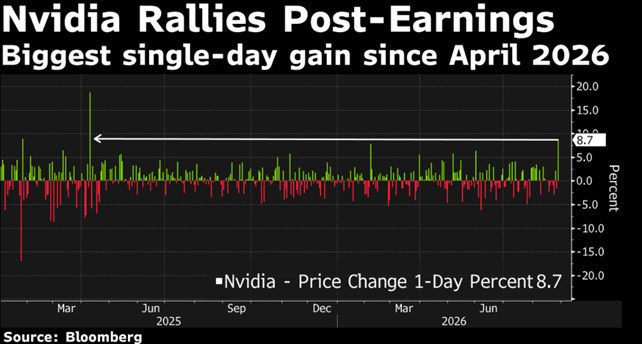
Nvidia projected revenue growth of around 70% for the next fiscal year, compared with the 45% expected by Wall Street, adding that growth could have been even stronger without production constraints. But the figure I found most significant was another one, because it tells us where artificial intelligence demand is really heading: revenue from customers outside the major technology giants increased by 138% year on year, growing faster than revenue from the big tech companies themselves.
In other words, AI demand is expanding beyond the usual Big Tech players and reaching startups, governments and traditional companies. The stock, which had fallen for seven consecutive trading sessions — weighed down precisely by concerns over the so-called “circular financing” issue, which we will discuss shortly — finally rebounded, breaking that negative streak.
It is worth explaining what this “circular financing” issue is, because it is exactly the kind of structural risk that a careful investor should understand. Circular financing occurs when a company invests in or lends money to a customer, and that customer then uses the same money to buy the company’s products. It creates a self-reinforcing loop: reported revenues can be inflated, while the level of genuine, external demand becomes harder to assess. In the case of AI, the concern is that part of the demand for chips may, in some form, be financed by the same companies supplying them. Nvidia’s latest quarterly results, with strong growth in demand coming from customers outside the major technology ecosystem, eased — but did not eliminate — those concerns. It remains something worth monitoring, but this week it worked in favour of the bulls.
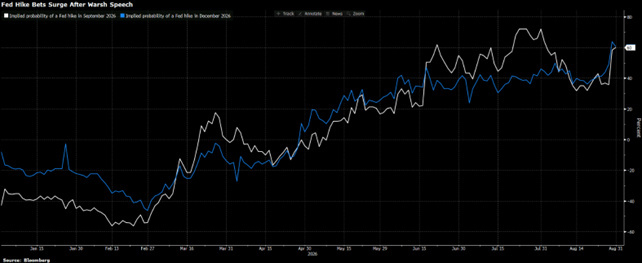
The second major event of the week was Jackson Hole, the Federal Reserve’s annual symposium, where Kevin Warsh spoke on Friday for the first time as Chair. His tone was broadly hawkish. Warsh made it clear that the fight against inflation is far from over and that the Fed’s job is not yet done. Consistent with his new approach, he also continued to avoid giving the market precise forward guidance.
It is the picture of a Federal Reserve that wants to say less and guide investors less directly. The July PCE data released during the week partly supports that stance: inflation remained at 3.7% year on year, with the core measure at 3.3%, unchanged from June and still more than one percentage point above the Fed’s 2% target. Most economists expect interest rates to remain unchanged in mid-September, but geopolitical tensions could push inflation higher again and ultimately force the Fed to raise rates.
There is also a broader issue in the background, one that reached a symbolic milestone this week: U.S. public debt has hit trillion.
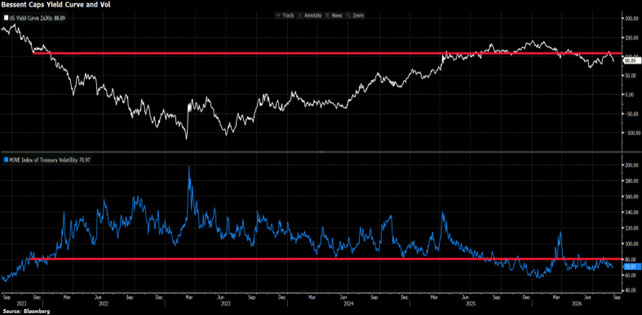
Excluding intragovernmental holdings, Treasury debt now stands at around 100% of GDP. It is an enormous figure, and one that continues to fuel concerns about the so-called “bond vigilantes” — investors who sell long-dated government bonds, pushing yields higher when they fear that deficits and inflation are getting out of control. But there is an important qualification that helps balance the picture. Treasury Secretary Scott Bessent has introduced a series of measures aimed at easing those concerns: supporting the yen to reduce the risk of Japan selling its Treasury holdings, doubling buybacks of long-dated government bonds, and potentially drawing on the Treasury General Account — which holds close to trillion — to help finance those purchases. In other words, the bond vigilantes have not taken control, at least for now. And as long as yields remain broadly consistent with nominal GDP growth of around 6.5%, there is little reason to panic. Bond yields are rising across the world, but for the time being investors appear to be interpreting higher yields more as a sign of stronger economic growth than as a threat.
And this brings us to the heart of this episode — the main idea I want to leave you with: seasonality.
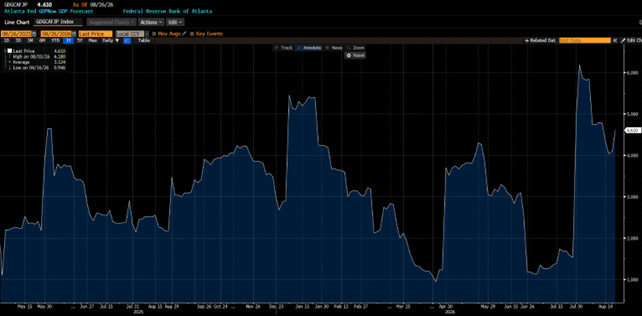
Because the economic data remain solid. The Atlanta Fed’s estimate for third-quarter GDP growth has actually risen to 4.6%, consumer spending remains resilient, and the labor market is holding up.
But from now through October, the calendar itself suggests a more cautious approach.
Let me give you the numbers, because they speak for themselves. Since 1950, September has statistically been the worst month of the year for equities, and the only month with a consistently negative average return — around -0.7% — with positive performance in only about 44% of cases.
And if we broaden the picture to include the U.S. electoral cycle, the pattern becomes even more pronounced. Midterm election years — and 2026 is one of them — have historically been the weakest phase of the four-year cycle, with drawdowns that tend to be deeper. Fidelity estimates an average mid-cycle decline of around 19%, while the largest drop seen so far this year was only about 9%, in March. Historically, market lows during these years have also tended to cluster between August and October. But this is where the constructive part comes in. This is what turns the discussion from a bearish forecast into an investor’s framework.
That same midterm-election period has historically proved to be one of the most reliable moments in the entire cycle to “buy the fear.” The historical record is striking: the S&P 500 has risen in the twelve months following every U.S. midterm election since 1950, with an average gain of around 15%. Looking back to 1938, returns have been positive in roughly 95% of cases. In other words, when autumn weakness has appeared during midterm years, it has historically not marked the beginning of a disaster. More often, it has created an attractive entry point ahead of the pre-election year — traditionally the strongest year of the presidential cycle, with average gains of around 16%.
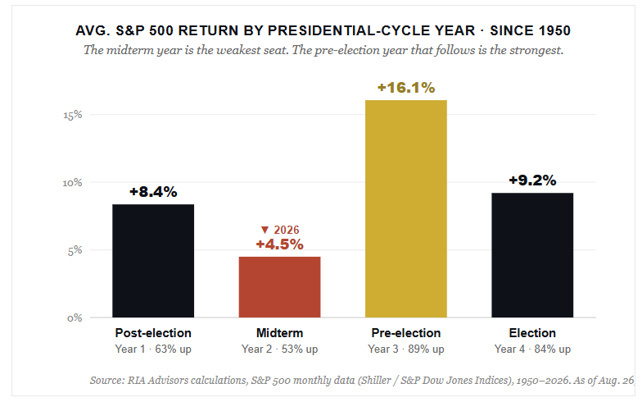
But I also need to add the intellectual honesty that lies at the heart of our profession: averages describe nineteen different cycles, not this one.
And this time, there are several factors that make the comparison imperfect. The market is close to record highs, valuations are elevated, there is an unusually high concentration around artificial intelligence, and the 30-year Treasury yield is close to 5.3%. More generally, historical statistics tend to reward investors who buy into weakness, not those who chase markets at their highs. And that is exactly the operational distinction that matters.
So what do we take away from all of this in practical terms?
The conclusion is simple: we are not selling, but we are preparing. It makes sense to trim positions that have run the most and bring them back toward their target weights, while increasing the liquidity reserve. Not because we want to exit the market — the fundamentals, earnings growth of around 25% once accounting effects are stripped out, and the historical pattern of seasonality do not justify that — but because we want to have dry powder ready if the weakness that September and October have historically signalled actually materialises.
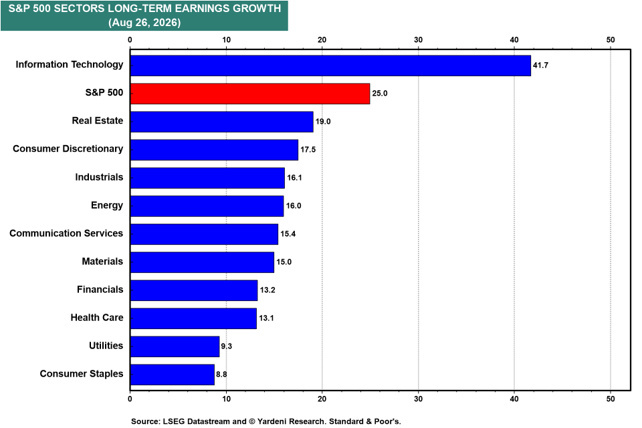
In summary, Nvidia has reignited confidence in artificial intelligence and reminded us that the earnings engine behind this story remains both powerful and real. But with September and the autumn of a midterm-election year approaching, the calendar calls for an extra degree of discipline. The underlying trend remains constructive. Our task over the coming weeks is not to guess the exact day the market will bottom, but to be ready when it does — with enough liquidity and clarity of mind to turn other investors’ fear into our opportunity.
The contents of this informative message are the result of the free interpretation, evaluation and appreciation of Pharus Asset Management SA and constitute simple food for thought.
Any information and data indicated have a purely informative purpose and do not in any way represent an investment advisory service: the resulting operational decisions are to be considered taken by the user in full autonomy and at his own exclusive risk.
Pharus Asset Management SA dedicates the utmost attention and precision to the information contained in this message; nevertheless, no liability shall be accepted for errors, omissions, inaccuracies or manipulations by third parties on what is materially processed capable of affecting the correctness of the information provided and the reliability of the same, as well as for any result obtained using the said information.
It is not permitted to copy, alter, distribute, publish or use these contents on other sites for commercial use without the specific authorization of Pharus Asset Management SA.